7-Day Budget Meal Plan for Cheap, Healthy Eating
Groceries feel expensive because they are. Food prices have stayed stubborn, and a few unplanned trips to the store can wreck your weekly budget fast. A solid 7-day budget meal plan helps you stop buying random extras, use ingredients across multiple meals, and spend with a plan instead of hope. That matters right now, especially if you are feeding a family, trying to eat better, or just tired of tossing wilted produce on Friday night. The smartest budget meal plans do not rely on fancy substitutions or unrealistic prep marathons. They stick to repeat ingredients, flexible meals, and leftovers that actually get eaten. Think of it like building a house with fewer materials but a better blueprint. You spend less, waste less, and still get meals you want to eat.
What makes this plan work
- It reuses ingredients like oats, eggs, chicken, beans, rice, and vegetables across the week.
- It cuts waste by planning leftovers into later lunches and dinners.
- It stays practical with simple meals that fit busy weeknights.
- It keeps nutrition in view without pushing pricey specialty foods.
Why a 7-day budget meal plan saves real money
Most people do not blow the grocery budget on one giant mistake. It happens in small leaks. Extra snacks here, takeout there, duplicate ingredients that never get used.
A 7-day budget meal plan closes those leaks because every item has a job. Rice shows up more than once. Roasted vegetables become side dishes, then grain bowls, then lunch. And that is the point.
EatingWell’s budget-friendly meal planning approach leans on affordable staples, balanced portions, and ingredient overlap. That model works because it treats your shopping list like a roster, not a wishlist.
Cheap meals are not the same as low-value meals. The best budget plan is the one that keeps you from ordering pizza on Thursday because the fridge makes no sense.
How to build your 7-day budget meal plan
Start with low-cost anchors
Every strong plan needs a few cheap staples that can stretch. Go with oats, eggs, brown rice, pasta, canned beans, potatoes, frozen vegetables, and a modest amount of chicken or another protein on sale.
These foods do the heavy lifting. They are filling, flexible, and easy to mix with fresh produce without blowing the budget.
Pick meals that share ingredients
Look, this is where most meal plans fall apart. People choose seven disconnected dinners, then end up buying half a store.
Instead, buy one tub of yogurt for breakfasts and snacks. Use spinach in eggs, grain bowls, and soup. Roast a batch of vegetables once, then repurpose them. Why buy for variety if your real goal is control?
Plan leftovers on purpose
Leftovers are only useful if they already have a destination. A roast chicken dinner can become wraps the next day. Extra rice can turn into fried rice or burrito bowls. Soup can cover lunch twice.
One smart trick is to cook one extra serving at dinner for the next day’s lunch. That beats buying separate lunch ingredients you may forget to use.
Waste is expensive.
A practical 7-day budget meal plan you can actually use
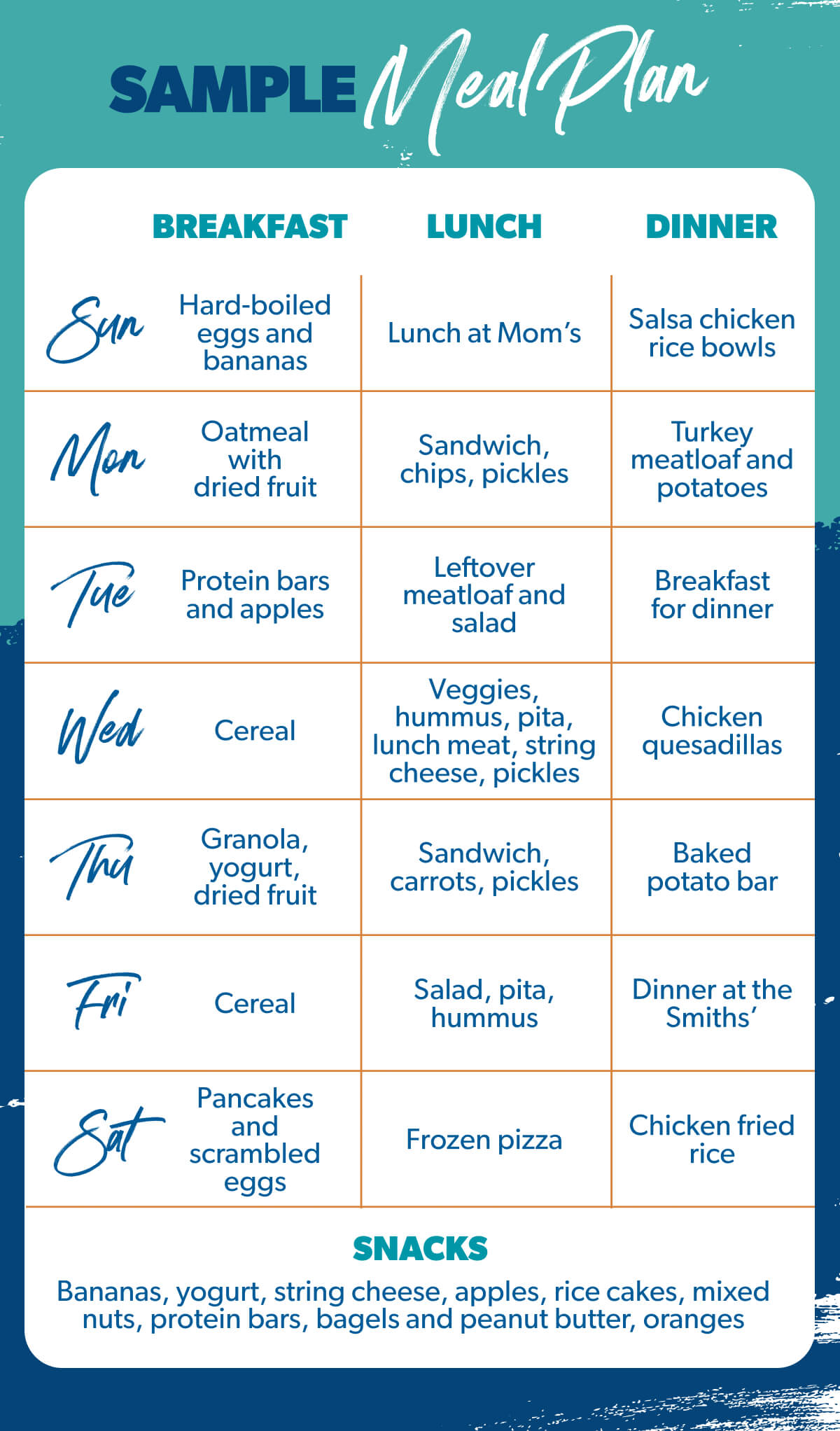
- Day 1: Oatmeal with banana for breakfast, turkey or bean sandwich for lunch, sheet-pan chicken with potatoes and carrots for dinner.
- Day 2: Scrambled eggs with toast, leftover chicken and veggies for lunch, black bean rice bowls with salsa and spinach for dinner.
- Day 3: Yogurt with oats and fruit, rice bowl leftovers for lunch, pasta with marinara and sautéed vegetables for dinner.
- Day 4: Peanut butter toast and apple, pasta leftovers for lunch, vegetable soup with grilled cheese for dinner.
- Day 5: Oatmeal again with frozen berries, soup for lunch, baked potatoes topped with beans, cheese, and steamed broccoli for dinner.
- Day 6: Egg muffins or hard-boiled eggs with toast, baked potato leftovers for lunch, chicken stir-fry with rice for dinner.
- Day 7: Yogurt and fruit, stir-fry leftovers for lunch, clean-out-the-fridge fried rice or frittata for dinner.
This style mirrors what budget-savvy planners have recommended for years, including the approach in EatingWell’s weekly budget meal plans. Repetition is not boring if the format changes. Rice bowls one night, fried rice later. Same core ingredient, different job.
Budget meal plan shopping list basics
Protein
- Eggs
- Canned black beans or chickpeas
- Chicken thighs or breasts
- Greek yogurt
- Peanut butter
Grains and starches
- Old-fashioned oats
- Brown rice
- Whole-wheat pasta
- Bread
- Potatoes
Produce
- Bananas
- Apples
- Carrots
- Onions
- Spinach
- Broccoli
- Frozen mixed vegetables
Other staples
- Marinara sauce
- Salsa
- Shredded cheese
- Olive oil
- Basic seasonings
If you shop sales first, swap in whatever produce or protein is cheapest that week. The structure matters more than the exact ingredients (and that gives you room to adapt without starting from scratch).
How to keep a budget meal plan from getting stale
Honestly, the biggest risk with any budget plan is boredom. But boredom usually comes from repeating the same full meal, not the same ingredient.
Change the seasoning profile. Use taco spices for beans one night, garlic and Italian seasoning the next. Roast broccoli for dinner, then chop it into pasta or eggs later. That is the cooking version of a good basketball team working the same players in different sets.
Also, keep one pressure-release option in the freezer. Frozen dumplings, veggie burgers, or a backup soup can save you from takeout when the week goes sideways.
Common mistakes that wreck a 7-day budget meal plan
- Buying too much fresh produce. Mix fresh and frozen so food lasts the full week.
- Planning aspirational meals. Weeknight dinners should be easy, not ambitious.
- Ignoring your calendar. If Tuesday is chaos, make that your leftovers night.
- Skipping snacks. A plan that leaves you hungry usually leads to convenience spending.
And one more thing. Do not copy someone else’s exact meal plan if your household eats differently. A good plan fits your real life, not an idealized version of it.
What to do next with your budget meal plan
The smartest move is simple. Build your next grocery list around five to seven dinners, two repeat breakfasts, and lunches made from leftovers.
That is how a 7-day budget meal plan becomes a habit instead of a one-week fix. Start small, track what gets eaten, and tighten the list next week. If food prices stay high, and there is little reason to think they will ease fast, households that plan better will keep more breathing room in the budget. So the real question is this: do you want your groceries to be cheaper, or just less random?