
Best Online Brokers for Stock Trading
Choosing the best online brokers for stock trading can feel simple until you start comparing the fine print. Zero-commission trading looks clean on the surface, but fees, order quality, research tools, and account features can change what you actually pay and how well you trade. If you want to buy stocks, ETFs, or options without stepping into avoidable costs, you need a broker that fits your habits, not just one with a flashy app. That matters now because the market keeps rewarding fast decisions and punishing sloppy ones. A poor platform can slow you down. A weak price on an order can cost you more than a monthly subscription ever would.
What the best online brokers for stock trading should give you
- Low or no commissions on stock and ETF trades.
- Good order execution, which can matter more than a headline fee.
- Useful research tools for screening stocks and reading company data.
- Simple account setup and a clean mobile app.
- Strong support and security, including two-factor authentication and SIPC coverage.
Look past the marketing. A broker is more like a kitchen knife than a shiny gadget. If it fits your hand and stays sharp, you use it well. If not, it gets in the way.
Why fees are only part of the best online brokers for stock trading
Commission-free trading changed the game, but it did not erase all costs. You can still run into payment for order flow concerns, margin interest, account transfer fees, and option contract charges. Some brokers also charge for broker-assisted trades or access to premium data.
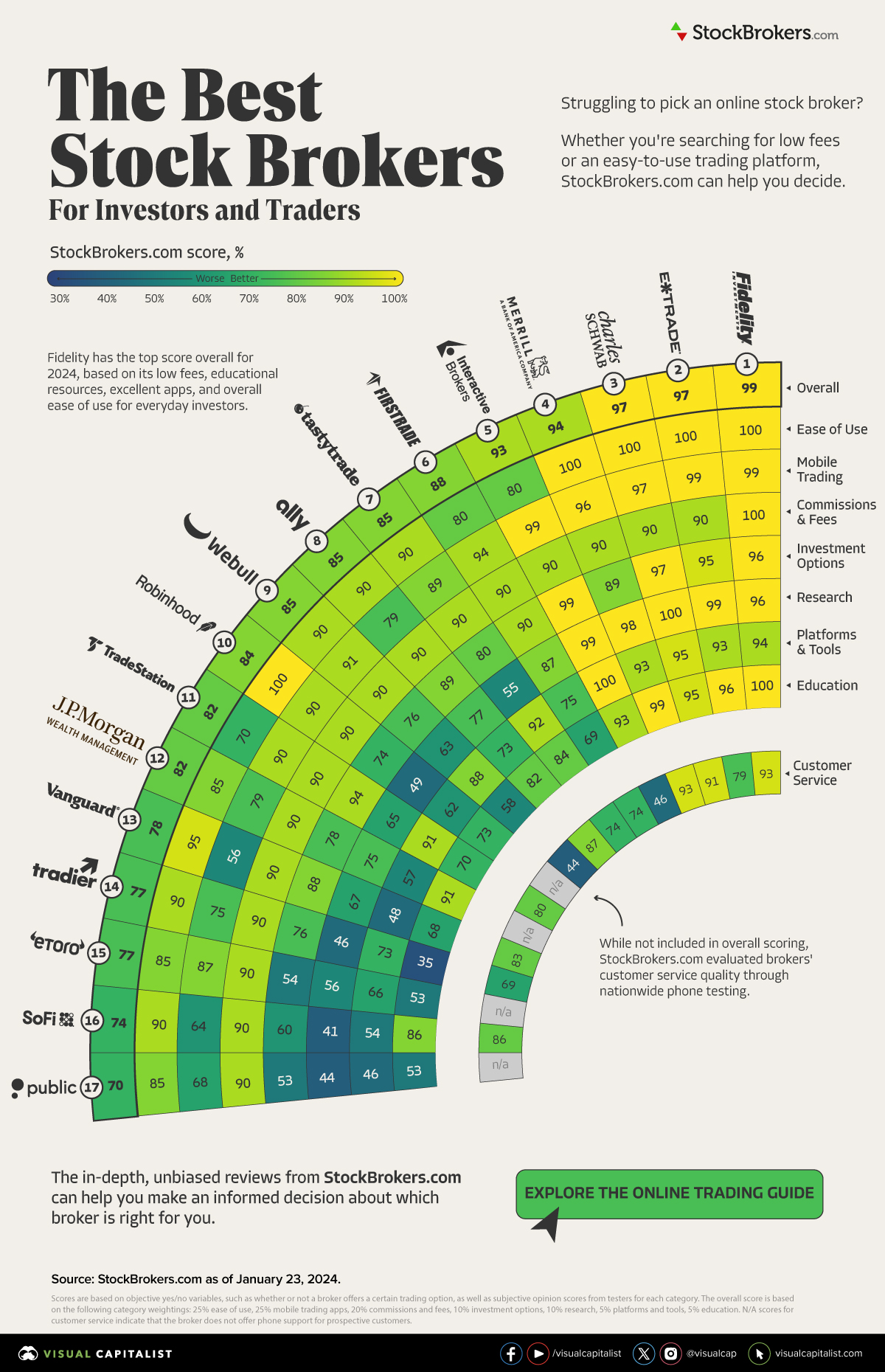
That is why you should compare the total experience, not a single number. Charles Schwab, Fidelity, and Vanguard tend to stand out for low-cost long-term investing. Robinhood, Webull, and Public often appeal to mobile-first traders. Interactive Brokers is strong if you want advanced tools and access to global markets (though the platform can feel dense at first).
What matters most is not whether a broker says “free.” It is whether the platform helps you place the trade you wanted, at a fair price, without extra friction.
How to compare broker platforms without getting lost
- Check pricing for your exact trades. Stocks, ETFs, options, and mutual funds can all have different fee structures.
- Test the app and desktop platform. If you hate the interface, you will avoid using it.
- Look at research depth. Earnings calendars, analyst reports, screeners, and charting tools matter more than most people think.
- Review cash yields and sweep rates. Idle cash should not sit there doing nothing.
- Study margin rates if you plan to borrow. These can vary a lot between brokers.
Here’s the thing. The best broker for a buy-and-hold investor is often not the best broker for an active trader. Do you really want the same platform if you trade twice a year versus twice a day?
Best online brokers for stock trading if you are a beginner
Beginners need clarity more than bells and whistles. Fidelity and Charles Schwab are often strong picks because they combine low costs with solid education, broad fund access, and stable platforms. Their interfaces are less chaotic than some trading-first apps, which can help you avoid dumb mistakes.
Want to start small? Pick a broker that lets you buy fractional shares, offers automatic investing, and shows you exactly what your order will do before you click submit. That kind of transparency matters. It keeps you from treating investing like a slot machine.
And if you want to learn without feeling buried, prioritize a broker with clean explainers and paper trading. Practice first. Real money second.
Best online brokers for stock trading if you want advanced tools
Active traders need speed, control, and better data. Interactive Brokers is a serious contender for that group because it offers deep market access, advanced order types, and powerful analytics. TD Ameritrade’s thinkorswim platform, now part of Schwab, also has a strong reputation among traders who want detailed charting and strategy tools.
But advanced tools can become clutter. If you do not use complex orders, scanners, or options analytics, you are paying with time instead of dollars. That trade-off is real.
Ask yourself these questions
- Do I need Level II quotes or just basic price charts?
- Will I use margin, options, or short selling?
- Do I care about desktop power more than mobile simplicity?
- Am I trading often enough to justify a steeper learning curve?
Security and support should not be an afterthought
Broker security is not glamorous, but it is non-negotiable. Look for two-factor authentication, biometric login, fraud monitoring, and clear account recovery steps. SIPC coverage protects against broker failure, but it does not protect you from market losses. That distinction matters.
Customer support matters too, especially when money is moving and something breaks. A broker with weak support can turn a small problem into a long headache. That is a bad deal on any day, and a brutal one on a volatile morning.
How to choose the right broker for your style
The right broker depends on what you actually do. If you want simple, low-cost investing, stick with a broker that keeps the experience clean. If you trade actively, choose one with strong execution tools and fast order entry. If you care about research, focus on data quality and screeners.
The best online brokers for stock trading are the ones you will keep using without second-guessing every click. That sounds plain, but it saves money and mistakes.
Start with your habits. Then compare fees, tools, and support. The broker choice should fit your plan, not the other way around. And if a platform makes basic investing feel like air traffic control, why stay there?
A sharper way to judge your next broker
Before you open an account, make a short checklist and stick to it. A broker should pass the test on cost, usability, security, and features. If it misses badly on one of those, keep moving.
Use a demo if one is available. Try one stock search, one watchlist, and one sample trade. That small test tells you a lot more than a slick homepage ever will.