
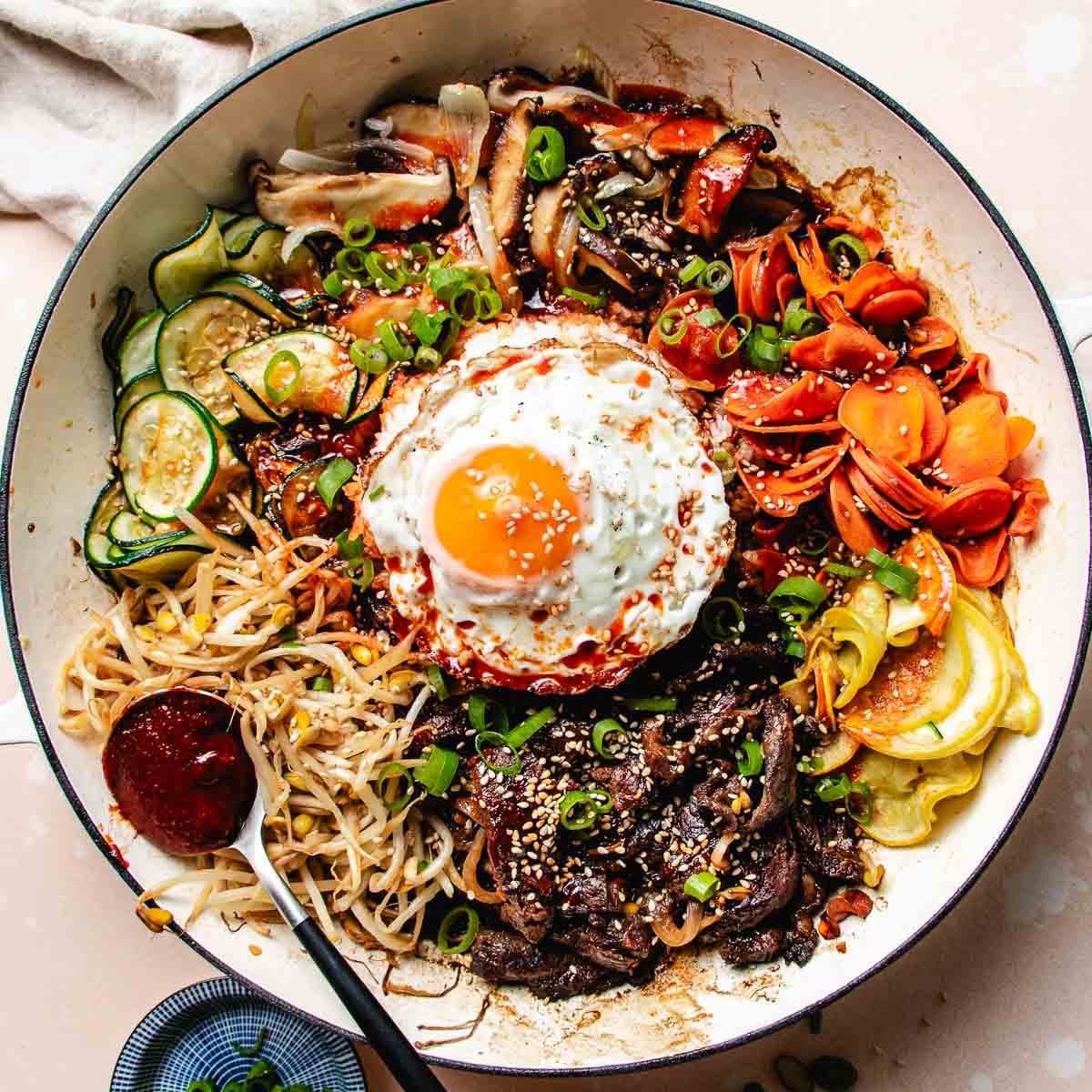
Bibimbap on a Budget: Fast, Flexible, Cheap Dinner
Weeknight dinner gets ugly fast when your grocery bill climbs and your fridge looks bare. That is where bibimbap earns its keep. It gives you one rice bowl, a few vegetables, a little protein, and a sauce that pulls the whole thing together without asking for a long shopping list or a restaurant tab.
Budget cooking works best when one dish can bend around what you already have. Bibimbap does that well. You can use leftover rice, odds and ends from the produce drawer, and a fried egg or some ground meat. Why pay for takeout when you can build a better bowl in your own kitchen, often for less?
- Use what you have. Bibimbap works with leftover rice and mixed vegetables.
- Keep the sauce simple. Gochujang, soy sauce, sesame oil, and a little sugar go a long way.
- Mix textures. Crisp, soft, chewy, and saucy make the bowl feel complete.
- Choose one protein. Eggs, tofu, chicken, or ground beef all work.
- Make extra components. You can reuse them for lunch the next day.
Why bibimbap fits a tight food budget
Bibimbap is a smart dinner because it acts like a clean-out-the-fridge meal with structure. You are not guessing your way through random leftovers. You are aiming for rice, vegetables, protein, and sauce. That shape keeps waste down and keeps spending predictable.
Rice is the anchor. It is cheap, filling, and easy to cook in bulk. Add a few vegetables, and suddenly you have a meal that feels complete without leaning on pricey ingredients. Think of it like building a sturdy shelf. The frame matters more than the fancy finish.
The real win is control. You decide how much protein to add, which vegetables to use, and how much sauce to make. That makes bibimbap one of the easiest meals to trim for cost without making it feel stripped down.
What makes a good bibimbap bowl?
A good bibimbap bowl is a balance of temperature, texture, and flavor. Warm rice sits under vegetables that are cooked or lightly seasoned, with a sauce that brings salt, heat, and sweetness. A fried egg on top is common, but not mandatory.
Here is the basic formula:
- Rice: short-grain, jasmine, or leftover white rice all work.
- Vegetables: spinach, carrots, zucchini, bean sprouts, mushrooms, or cabbage.
- Protein: egg, tofu, chicken, ground pork, or beef.
- Sauce: gochujang mixed with soy sauce, sesame oil, vinegar, and a little sweetener.
- Toppings: sesame seeds, scallions, kimchi, or a drizzle of extra oil.
Do you need all of that? No. But you do need enough contrast so the bowl does not taste flat. A bowl with rice and one vegetable is just lunch. A bowl with several parts feels like a real meal.
How to keep bibimbap cheap
Start with the ingredients that stretch. Rice and cabbage are usually strong value buys. Eggs are still one of the cheapest protein options in most grocery stores, though prices can swing. Tofu is another solid option if your local store carries it at a fair price.
Then build around sales. If zucchini is cheap this week, use that. If mushrooms are marked down, slice them thin and cook them hard in a hot pan. Bibimbap does not punish substitutions. It rewards them.
Smart swaps that cut cost
- Use frozen spinach instead of fresh.
- Swap beef for eggs or tofu.
- Use bagged coleslaw mix for crunch and color.
- Mix leftover roasted vegetables into the bowl.
- Stretch a small amount of meat with extra vegetables.
One more thing. Sauce can be expensive if you chase specialty bottles you will barely use. Buy one jar of gochujang and build from there. A little goes far, and it stores well.
How to build bibimbap without extra work
Cook the rice first. While it cooks, prep the vegetables in simple ways. Some can be raw, some can be quickly sautéed, and some can be blanched. You do not need separate recipes for each component.
For a practical weeknight version, use one pan and one pot. Fry or scramble the protein, cook or warm the vegetables, then assemble everything in bowls. If you want a crisp edge on the rice, let it sit in a hot pan for a minute or two. That little detail changes the texture in a good way.
Here is a simple order that keeps things moving:
- Cook the rice.
- Mix the sauce.
- Cook the protein.
- Sauté or season the vegetables.
- Assemble and top with sesame seeds or a fried egg.
Honestly, the best budget version is the one you will repeat. A perfect bowl that takes an hour is less useful than a solid bowl you can pull together in 25 minutes.
Bibimbap and meal planning
Bibimbap works well for meal planning because each part can be reused. Cook extra rice for another dinner. Make extra vegetables and tuck them into wraps, noodles, or omelets. If you buy a bunch of spinach, it does not have to end its life in a salad.
That flexibility matters when you are trying to lower food waste. The USDA says households throw away a lot of edible food every year, and that waste carries a real cost. A dish like bibimbap helps you use small amounts of many ingredients before they go soft or stale.
Think of bibimbap as a template, not a rulebook. Use it to clear the fridge, control spending, and still eat something that feels intentional.
A budget bowl that still feels worth making
Bibimbap is not fancy cooking. It is practical cooking with a little style. That is why it works so well for readers trying to cut food costs without sinking into boring dinners.
If you keep rice on hand, buy one dependable sauce, and choose vegetables based on price, you can build bibimbap again and again without repeating the same bowl twice. Next time you plan dinner, ask yourself this: what is already in your kitchen that can become a rice bowl tonight?