
Debt-Free Plan That Actually Works
You can make every payment on time and still feel stuck, especially when interest keeps eating the progress before you see it. A debt-free plan matters now because credit card APRs remain high, household costs are still tight, and one missed paycheck can turn a manageable balance into a mess. NerdWallet frames debt payoff as a mix of math, habits, and follow-through, which is the right lens. I would add one blunt point from years covering consumer finance apps and fintech promises: no tool fixes a plan you will not repeat. The goal is not a perfect spreadsheet. It is a system that tells your money where to go before the lender does.
What helps first
- List every debt, including balance, APR, minimum payment, and due date.
- Pick one payoff method so you are not changing tactics every month.
- Keep paying minimums on all accounts to protect your credit history.
- Build a small cash buffer so one flat tire does not go back on a card.
- Track progress monthly, not daily, because debt payoff can feel slow up close.
Build your debt-free plan around real numbers
Start with a full debt inventory. Include credit cards, personal loans, medical bills, buy now pay later balances, auto loans, student loans, and any money owed to family. Do not round down to make the number feel better.
The four numbers that matter most are balance, interest rate, minimum payment, and due date. Once you see them together, patterns appear fast. A $600 store card at 29.99% APR may be more toxic than a $6,000 loan at 8%.
NerdWallet recommends choosing a payoff strategy and matching it to your motivation style. That is sound advice, because the best plan is the one you can stick with after the first burst of energy fades.
Use a simple debt table
You do not need a paid app. A spreadsheet, notebook, or bank budgeting tool can do the job if you update it every payday. Put the highest-interest debts in one color and the smallest balances in another, because your eyes should catch the next target fast.
Pick the debt-free plan method you will follow
The debt avalanche method targets the highest APR first while you pay minimums on everything else. Mathematically, it often saves the most interest. If you have one or two high-rate credit cards, this method can cut the total cost of getting out of debt.
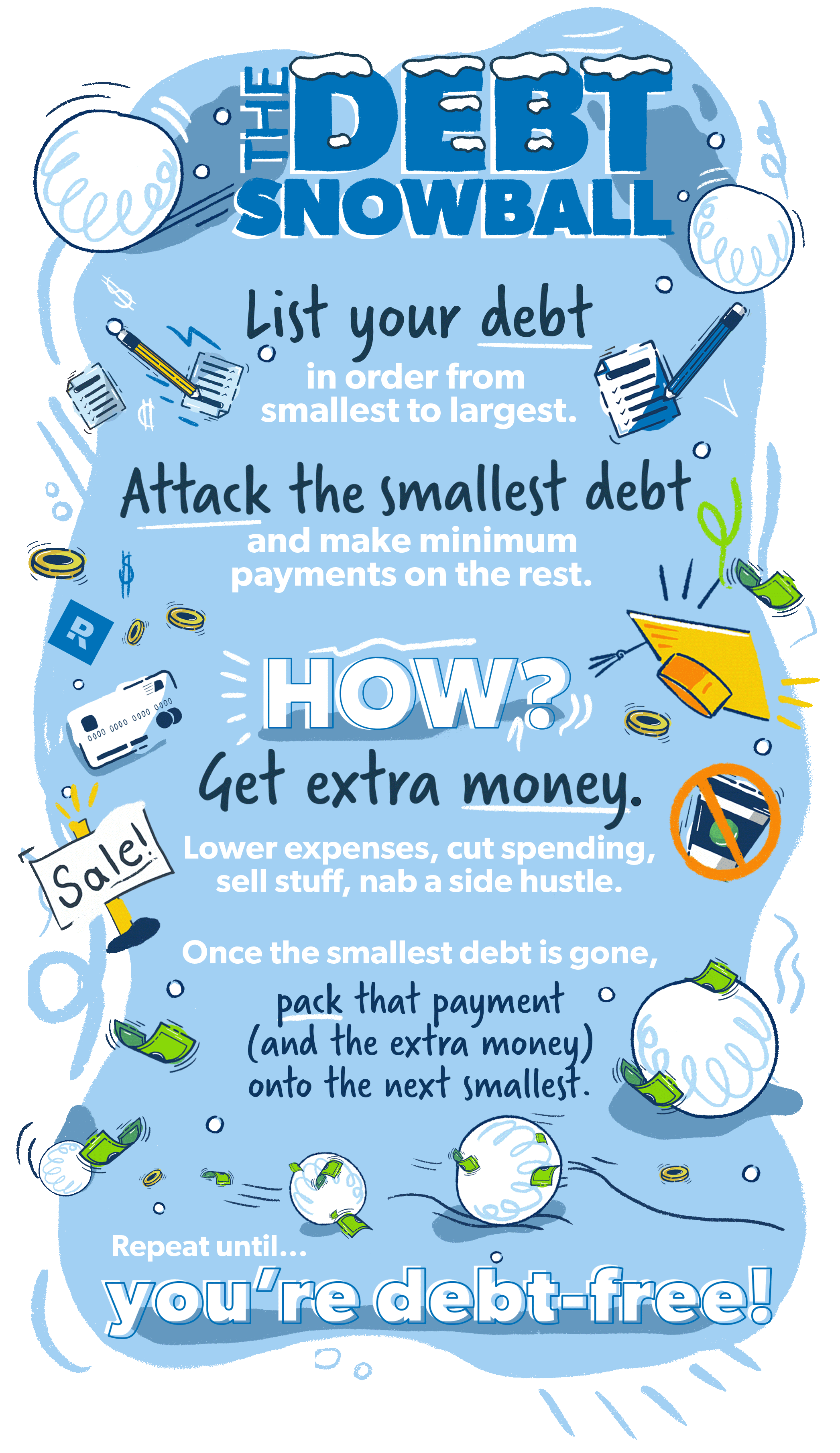
The debt snowball method targets the smallest balance first. It may cost more in interest, but it gives you faster wins. Why does that matter? Because debt payoff is part arithmetic and part nerve.
Small wins keep the plan alive.
Here is my take: use avalanche if your income is stable and your motivation is solid. Use snowball if you have tried and quit before. Like cooking on a busy weeknight, the best recipe is the one you will actually make after a long day.
Make room in your budget without pretending life is free
A debt-free plan fails when the budget is fantasy. If your plan assumes no car repairs, no school costs, no birthdays, and no takeout after a 10-hour day, it will crack. Build the plan around your real calendar, not your best-behavior week.
Look first at cash leaks that do not add much value. Subscriptions, food delivery fees, unused memberships, and impulse retail orders can hide in plain sight. Then move to bigger choices, such as insurance quotes, housing costs, or car payments, if the smaller cuts do not create enough room.
- Set minimum payments on autopay if your cash flow can handle it.
- Choose one extra payment amount for the target debt.
- Schedule that extra payment right after payday.
- Review your balances once a month.
- Move to the next debt when the target hits zero.
Protect your credit while paying debt down
Payment history and credit utilization carry heavy weight in common credit scoring models, including FICO scoring. That means late payments can hurt, and high card balances can hold your score down. Paying on time and lowering revolving balances are usually the cleanest moves.
Be careful with balance transfers and debt consolidation. They can help if you qualify for a lower rate and stop adding new charges. But if you transfer a balance and refill the old card, you have only moved the smoke to another room.
A good consolidation loan should lower your interest cost, simplify payments, or both. Read the origination fee, repayment term, and APR before signing. A lower monthly payment can cost more overall if the term stretches too long.
Use hardship options before you miss payments
If you cannot make minimum payments, call the lender before the due date. Ask about hardship plans, lower temporary rates, waived fees, or adjusted payment schedules. Credit card issuers and loan servicers often have programs, but you usually need to ask.
Nonprofit credit counseling can also help. Agencies affiliated with the National Foundation for Credit Counseling can review your budget and may offer a debt management plan. That is different from debt settlement, which can damage credit and may create tax issues if forgiven debt is treated as income.
Keep your debt-free plan from turning into a one-time project
Debt payoff is easier when the plan has guardrails. Keep one card out of your wallet if it tempts you, and remove saved card numbers from shopping sites. Friction helps.
Build a starter emergency fund alongside payoff, even if it begins at $500. Without cash, every surprise becomes new debt. That is how people end up running in place while still making payments.
Review your plan after life changes. A raise, rent hike, medical bill, or new child can change the math. Your plan should bend without breaking.
What I would do next
Tonight, write down every debt and choose either avalanche or snowball. Then schedule one extra payment, even a small one, toward the first target. The lenders already have a plan for your money, so the real question is simple: will you make a better one first?