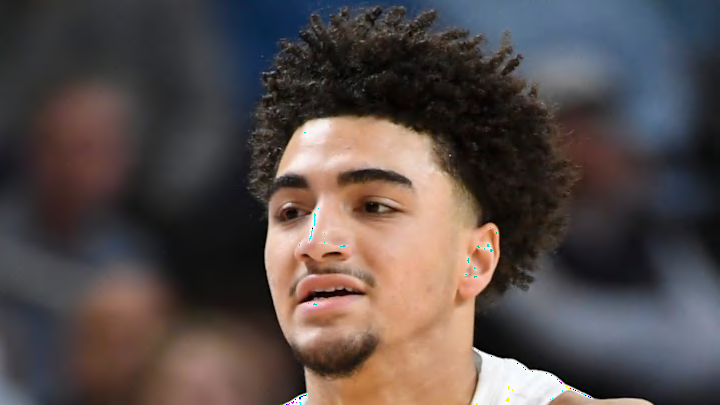
Derek Dixon Transfer Portal Move Signals Pressure On Tar Heels Backcourt
North Carolina fans woke up to a jolt: Derek Dixon transfer portal chatter is real, and that sends ripples through a backcourt already juggling expectations. You care because the Tar Heels need stability after flirting with a deep run, and a portal exit from a promising guard alters spacing, minutes, and future recruiting pitches. MainKeyword Derek Dixon transfer portal talk also exposes how the portal now acts as a pressure valve for players seeking bigger roles. If you think this is just another offseason footnote, consider how one roster shift can tilt a season’s rhythm.
What Changes Immediately
- Ball-handling depth shrinks, forcing more minutes on returning starters.
- Recruiting priorities pivot toward combo guards who can defend and shoot.
- Rotation experiments in summer workouts become higher stakes.
- NIL conversations intensify to retain other at-risk players.
Why Derek Dixon Transfer Portal Noise Matters
I have watched Chapel Hill rosters swing on portal moves for years. Losing a guard with upside is not just about scoring; it is about practice intensity and defensive versatility. The portal gives players leverage, and programs either adapt or get exposed. Are the Tar Heels prepared to retool without slipping in the ACC race?
Look, the portal rewards programs that move fast and communicate clearly. Hesitation costs wins.
This is the single-sentence paragraph.
Derek Dixon Transfer Portal Scenarios
Scenario 1: Dixon Returns
If he stays, Hubert Davis has to promise defined minutes and a green light on spot-up looks. That means reshuffling sets to free him on the wing and pairing him with a steadier primary ball-handler. Think of it like shifting a chess rook to open a file; small repositioning unlocks movement across the board.
Scenario 2: Dixon Leaves
A departure opens a scholarship and a potential NIL slot. The staff must scan the portal for a guard who can guard the point of attack and hit 37% from deep. Davis should also lean on incoming freshmen, but asking a first-year to anchor perimeter defense is risky. The ACC will test every gap.
How North Carolina Should Respond
Portal news can feel chaotic, yet a disciplined plan steadies the ship. Here is the thing: urgency wins the offseason.
- Call the room: meet with every guard to clarify roles and NIL expectations.
- Target shooting: prioritize a transfer with a proven catch-and-shoot track record.
- Defend first: add a defensive specialist to reduce pressure on RJ Davis.
- Communicate with recruits: reassure 2025 targets that the system still fits their game.
Impact On ACC Dynamics
Rivals are circling. Duke and Virginia both value perimeter length, so any UNC lapse on the wing becomes a spotlight. Portal churn across the league is real, but programs that balance retention with selective additions usually climb in March. Think of Miami’s recent runs as proof.
Player Development Stakes
If Dixon exits, expect more reps for younger guards in summer scrimmages. That accelerates decision-making growth but risks turnovers early in the schedule. A structured skills plan—tight handles, pull-up reps, and on-ball defense drills—can blunt that risk. And yes, the staff should track shot quality data to ensure efficiency does not crater.
Final Word On The Portal Gamble
The portal is now a non-negotiable part of roster building. North Carolina either adapts to Derek Dixon’s choice or gets left chasing cohesion in January. What bold move should they make before the schedule locks in?