
Family Weekly Budget for Busy, Expensive Weeks
Your hardest money weeks are rarely dramatic. They are the weeks with a graduation, a quick trip, extra meals out, school events, gifts, gas, parking, and one last-minute Target run that somehow costs $74. A family weekly budget matters because these ordinary pileups can quietly break your monthly plan. A recent Money Saving Mom weekly recap about graduation, New York City travel, reading, and family life is a useful reminder of how real budgets work. They do not happen in neat spreadsheets. They happen in full calendars. If you wait until the credit card statement arrives, you are already playing defense. Better to plan the week before it starts, give every unusual expense a name, and keep enough room for the small stuff that always tags along.
What to Handle First
- Set a weekly spending cap before the calendar fills up.
- Separate one-time costs from normal groceries, gas, and bills.
- Build a small buffer for parking, tips, snacks, and forgotten items.
- Use a post-week review to improve next week, not to shame yourself.
Why a Family Weekly Budget Works Better Than a Monthly Guess
Monthly budgets look tidy, but family life is lumpy. One week is quiet, then the next one brings a ceremony, a hotel night, three takeout meals, and a birthday gift you meant to buy earlier.
A family weekly budget lets you see pressure before it turns into debt. Think of it like meal prep. You can still change dinner plans, but you are less likely to panic-order pizza four nights in a row because nothing is thawed.
Big weeks do not have to become budget failures. They need a short plan, a little margin, and one honest check-in.
The Bureau of Labor Statistics Consumer Expenditure Survey has long shown that housing, transportation, and food take the largest shares of household spending. That tracks with real life. During a busy week, those categories tend to swell first, especially transportation and food away from home.
Build a Family Weekly Budget Around the Calendar
Start with your calendar, not your bank app. The bank app shows what already happened, while the calendar shows where money is about to leak.
Look at the next seven days and mark anything that could cost money. Be annoyingly specific here. A graduation does not only mean a gift. It might mean clothes, flowers, lunch out, fuel, photos, and dessert for relatives.
Use Three Buckets
- Fixed weekly costs: groceries, gas, childcare, recurring activities, and regular giving.
- Event costs: tickets, travel, gifts, special meals, parking, pet care, or clothing.
- Flex money: coffee, snacks, forgotten school supplies, tolls, and small treats.
Here is the pushback I will make as someone who has covered consumer tech and personal finance tools for years. Budgeting apps are helpful, but they cannot make judgment calls for you. They can sort transactions after the fact, but they will not know that this is the week you need to say no to an extra restaurant meal.
Write the number down.
That single spending cap changes the conversation. Instead of asking, “Can we afford this?” every six hours, you can ask, “Does this fit the week we already planned?”
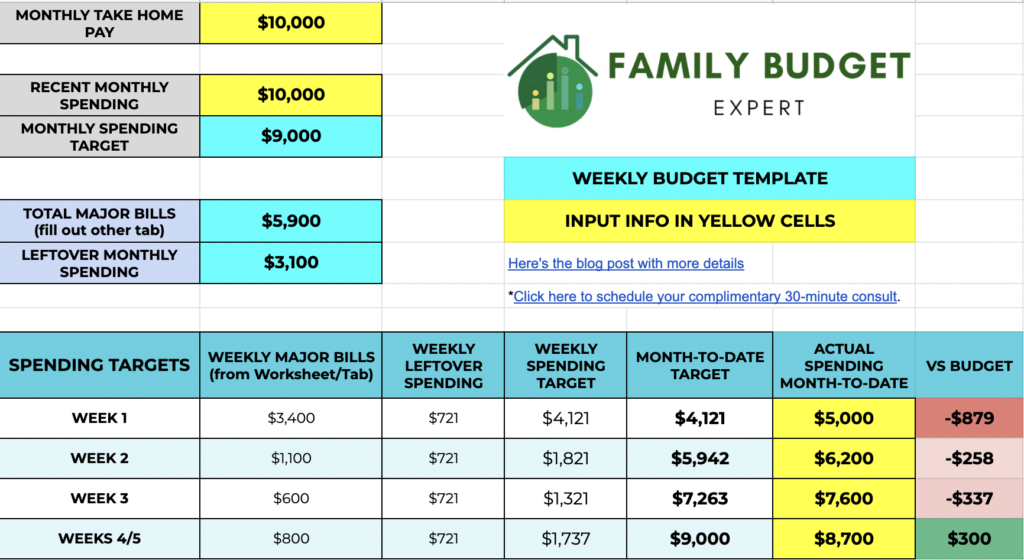
A Simple Family Weekly Budget Template
You do not need a fancy system. A notes app, envelope, spreadsheet, or printable page can work if you actually check it.
For a busy week, try this structure:
- Starting weekly amount: $650
- Groceries: $175
- Gas and transportation: $90
- Graduation gift and card: $75
- Meals out: $120
- Trip extras: $100
- Buffer: $90
Your numbers may look nothing like these, and that is fine. The point is to stop pretending a full week costs the same as a quiet one.
Here is where many families get tripped up. They budget for the headline item, like the hotel or the gift, then forget the supporting cast. In New York City, for example, a short visit can bring transit fares, coffee, museum tickets, bag storage, rideshare surges, and airport food. None of those is shocking alone. Together, they punch hard.
How to Keep Food Costs From Taking Over
Food is the sneakiest category during a packed week. You are tired, the schedule runs late, and suddenly convenience starts making every decision.
Plan two backup meals before the week begins. Not aspirational meals. Real ones. Frozen soup, breakfast-for-dinner, pasta with jarred sauce, rotisserie chicken, or sandwiches can save you from a $48 drive-thru run.
Use the “One Nice Meal” Rule
If the week includes a celebration or trip, choose the meal that matters most. Spend there on purpose, then keep the other meals simple.
This is not about being cheap. It is about putting money where the memory is. Would you rather spend on a relaxed graduation dinner, or bleed the same amount across rushed airport snacks and random takeout?
- Pack water bottles and shelf-stable snacks for errands or travel days.
- Cook one double batch before the week gets busy.
- Check restaurant menus before you go, especially with kids.
- Use grocery pickup to avoid impulse buys when you are tired.
Make Room for Joy Without Letting the Week Drift
A good budget should not strip the fun out of a graduation, a family visit, or a quick city trip. It should protect the parts you care about most.
Look, there is a difference between planned generosity and vague spending. Planned generosity says, “We want to give this gift and host dessert afterward.” Vague spending says, “We will figure it out,” then quietly borrows from next month’s rent, savings, or credit card balance.
Families need memory money (even if the phrase sounds a little corny). Put a line in the budget for the photo print, the special breakfast, the museum stop, or the book you want to read on the train. Small joys are easier to enjoy when they are not followed by financial regret.
Review Your Family Weekly Budget in 10 Minutes
The review is where the budget gets smarter. Do it once the week ends, while the details are still fresh.
Ask three questions:
- What cost more than expected?
- What did we skip that we did not miss?
- What should we plan earlier next time?
Do not turn this into a courtroom drama. The goal is pattern recognition. If every travel week blows up because of food, pack better snacks next time. If every school event triggers an emergency clothing purchase, create a small sinking fund for kid-related extras.
The Next Busy Week Is Already Coming
Your family weekly budget should feel like a coaching plan, not a scolding. Set the cap, name the odd expenses, protect the moments that matter, and leave room for real life.
The next time your calendar looks packed, take 15 minutes before the spending starts. Future you will have fewer surprises and a better shot at enjoying the week you worked so hard to plan.