
How to Invest in Cryptocurrency for Beginners
Crypto can feel simple until you put real money on the line. Then the questions pile up fast. Which coin should you buy? Do you need a wallet? How much risk is too much? If you are trying to figure out how to invest in cryptocurrency for beginners, the stakes are real because prices move fast, scams are common, and the rules are still shifting. You do not need to predict the next market craze to get started. You need a clear process, a small first position, and a plan you can actually follow when prices swing hard. That is the part most new investors skip, and it is usually the part that matters most.
Here is the good news. You can start small, keep your costs low, and avoid the worst mistakes without becoming a full-time trader. Think of crypto investing like building a house. You need a foundation before you start adding floors. Otherwise, one bad week can shake the whole thing.
What to know before you buy
- Crypto is volatile. A coin can rise or fall sharply in a short time.
- Not all coins serve the same purpose. Bitcoin, Ethereum, and stablecoins do different jobs.
- Fees matter. Trading fees, spread costs, and network fees can eat into small purchases.
- Security is non-negotiable. Account protection matters as much as the investment itself.
Start with the basic question: why are you buying crypto at all? Are you looking for long-term exposure, a small speculative position, or a way to learn the market? Your answer should shape everything else, from what you buy to where you store it. If you do not know your reason, you are more likely to chase headlines and buy at the wrong time.
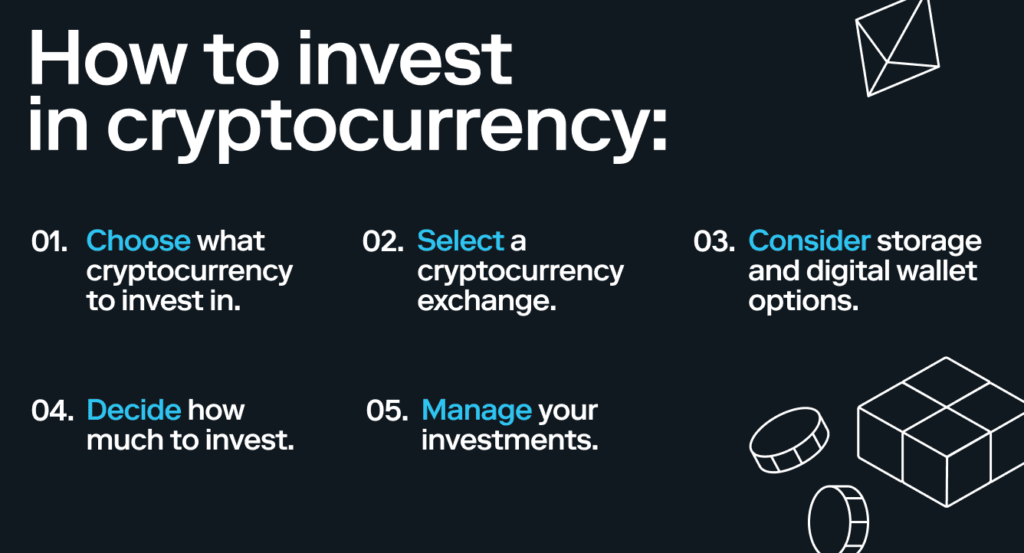
How to invest in cryptocurrency for beginners: the first steps
- Pick a reputable exchange. Look for strong security, clear fees, and regulatory compliance in your country.
- Verify your account. Most platforms require identity checks before you can trade.
- Fund with a small amount. Use money you can afford to leave untouched for a while.
- Choose a starting asset. Many beginners begin with Bitcoin or Ethereum because they have deeper markets and more public information.
- Buy slowly. Consider spreading purchases over time instead of using one lump sum.
Cost basis matters here. If you buy in pieces, you reduce the pressure to guess the perfect entry point. That is useful because nobody gets that right consistently. Not even the loudest market pundits.
My rule for beginners is simple. If you cannot explain what you own, why you own it, and what would make you sell, you are not investing. You are guessing.
How to choose a coin without getting lost in the hype
Look for utility, liquidity, and staying power. Bitcoin is often treated as a store of value. Ethereum supports a large chunk of decentralized apps and smart contracts. Other coins may have narrow use cases, but many are thinly traded or built on pure marketing. Why buy something if you cannot clearly explain its purpose?
Read the project’s white paper or a plain-language summary from a trusted source. Then check whether the token has a real use, an active development team, and enough trading volume to enter and exit without major slippage. If the pitch sounds like a lottery ticket, treat it like one.
Where to keep your crypto
You have two broad choices: keep it on an exchange or move it to a wallet you control. Exchanges are easier for beginners. Wallets give you more control, which also means more responsibility. That tradeoff is real.
Exchange wallet or self-custody wallet?
For a small starter amount, many beginners leave funds on a reputable exchange while they learn the basics. For larger amounts, a hardware wallet can reduce the risk of exchange failure or account takeover. If you move coins to a wallet, save your recovery phrase offline and never share it. Ever.
Security should feel boring. That is a good sign. Use two-factor authentication, a unique password, and a device you do not share for trading. A weak setup is like leaving your front door open because you trust the neighborhood.
How much should you put in?
Keep the first position small. Very small, if you need to learn by doing. For most beginners, crypto should sit inside a wider portfolio that also includes cash, index funds, and other assets. A tiny allocation can give you exposure without turning every market swing into a personal crisis.
There is no perfect percentage. But there is a bad one: too much. If a drop would wreck your budget or force a panic sale, the position is too large. Simple rule, hard to follow.
Common beginner mistakes
- Buying because of social media hype. A fast price move is not a thesis.
- Using leverage. Borrowed money can magnify losses just as fast as gains.
- Ignoring fees. Small accounts feel the drag more sharply.
- Skipping security steps. Account recovery after a hack is painful and uncertain.
- Putting all funds into one coin. Concentration can cut both ways.
And here is the part people hate hearing. If your plan depends on a coin doubling just to feel smart, the plan is weak. Better to make fewer moves and survive long enough to learn the market.
A simple beginner plan you can follow
Use this as a starting framework:
- Open an account on a trusted exchange.
- Deposit a small amount.
- Buy one major asset you can explain clearly.
- Move larger holdings to a secure wallet if needed.
- Set a review date once a month.
- Decide in advance when you would sell some or all of it.
Patience beats panic.
That monthly review matters because crypto moves on emotion as much as fundamentals. A regular check-in keeps you from reacting to every sharp move. It also gives you room to ask a better question. Is your position still sized for your life, or has the market quietly taken over your attention?
Stay grounded when the market gets loud
The best beginner strategy is usually the least dramatic one. Buy carefully. Store assets safely. Keep your position size modest. And keep learning from reliable sources such as major exchange security guides, blockchain project documentation, and public market data from firms like Coinbase, Kraken, or Gemini when relevant to your region.
Crypto rewards discipline more than bravado. If you treat it like a side position and not a personality trait, you give yourself a real chance to learn without getting burned. The market will still be noisy. Your job is to stay calm enough to hear what matters next.