
Kraken Equities Review for Stock Investors
If you are looking at Kraken because you already trust it for crypto, the big question is simple. Should you use Kraken Equities for stocks too? That matters now because more platforms want to keep your whole portfolio under one roof, and convenience can hide trade-offs. This Kraken Equities review looks at what you actually get, where the platform still feels thin, and who should think twice before moving money.
Kraken has a strong name in digital assets, but stocks are a different fight. Order types, account features, research tools, and access all matter. A slick brand is not enough. You need to know whether this is a serious brokerage option or just an add-on meant to keep you from opening a second app.
What stands out
- Kraken Equities adds stock and ETF trading to a crypto-focused platform.
- It may appeal to users who want one account for multiple asset types.
- The biggest question is depth. Convenience is useful, but thin brokerage features can become a real problem.
- For active stock investors, platform tools and account options matter as much as price.
What is Kraken Equities?
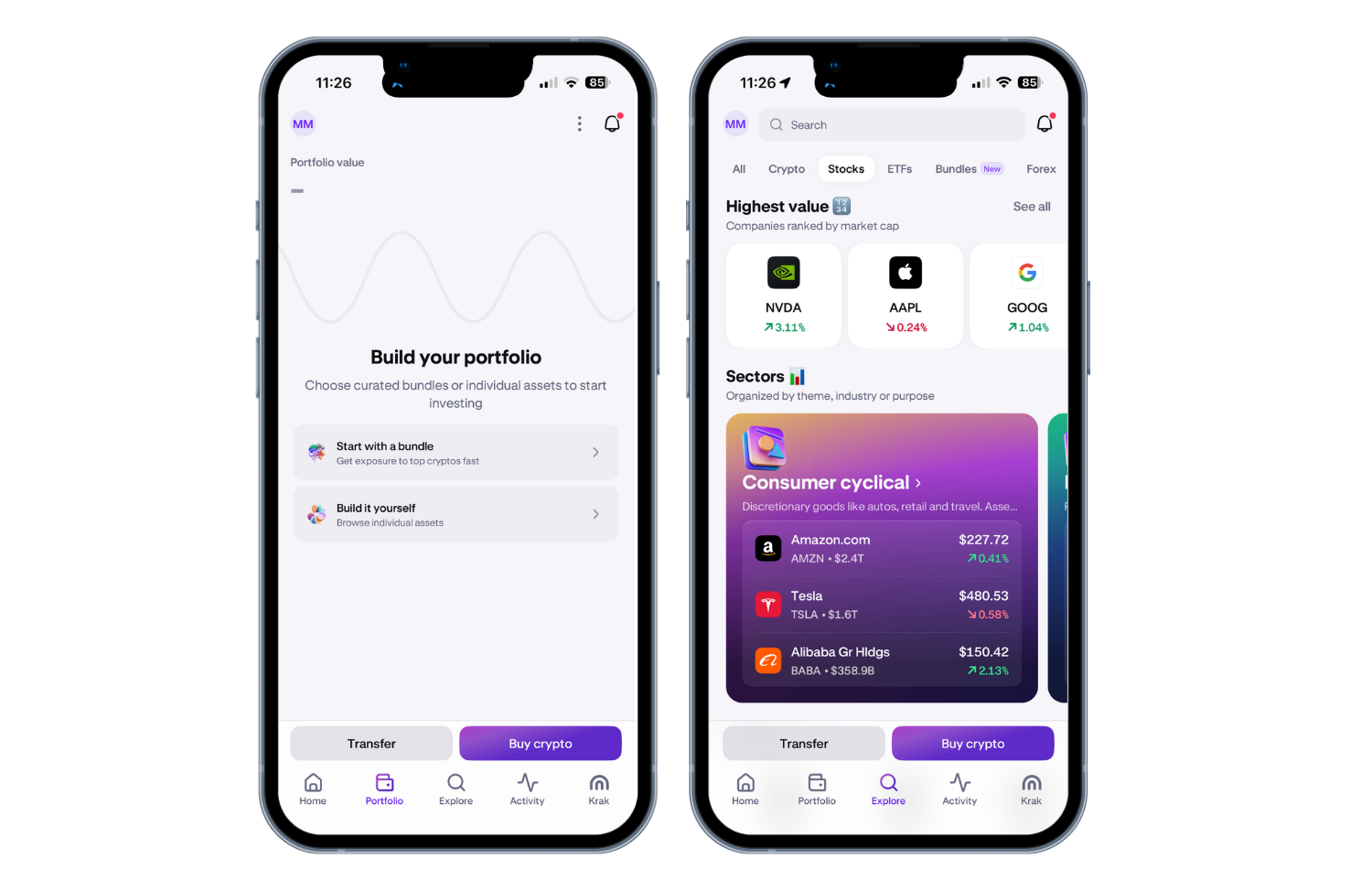
Kraken Equities is Kraken’s push into traditional investing, giving eligible users access to stocks and ETFs alongside crypto. The pitch is obvious. One dashboard, one login, one funding flow.
That sounds efficient, and for some people it is. But combining products is a bit like a grocery store adding a pharmacy. It is handy if you need basics in one stop, yet you still want to know whether the specialist down the street does the job better.
Kraken’s edge is familiarity for crypto users. Its risk is that stock investors may expect a full-service brokerage and find a lighter feature set instead.
Kraken Equities review: who is it really for?
This platform makes the most sense for a narrow group of users. If you already hold crypto at Kraken and want to buy a few stocks or ETFs without managing another account, the appeal is clear.
Look, that is a valid use case. Not everyone needs advanced charting, retirement accounts, deep screening tools, or piles of analyst reports.
Kraken Equities is likely a better fit for simple, buy-and-hold investors than for traders who live inside market data.
Who may like it:
- Existing Kraken users who want fewer financial apps
- Beginners who want basic access to stocks and ETFs
- Investors building a simple portfolio of broad-market funds and a small crypto allocation
Who may want a traditional broker instead:
- Active stock traders who need more order control
- Investors who want retirement accounts or richer tax tools
- People who rely on research, screeners, and third-party analyst data
How Kraken Equities compares with standard brokers
The hard truth is that stock investing is a mature market. Firms like Fidelity, Charles Schwab, and E*TRADE have spent years building tools, service layers, account types, and educational resources. New entrants do not get extra credit for showing up.
So what does that mean in practice?
Account convenience
Kraken has a clean argument here. If you want crypto and equities in one place, fewer transfers and fewer passwords can reduce friction. And yes, that matters if your current setup feels messy.
But convenience can become expensive if the platform limits what you can do later.
Research and tools
This is where many newer brokerage products run into trouble. Stock investors often need stock screeners, earnings data, news feeds, watchlists, and portfolio analytics that go beyond a simple buy button. If Kraken Equities stays light in these areas, experienced investors will notice fast.
Honestly, this is usually the dividing line. A beginner sees simplicity. A seasoned investor sees missing infrastructure.
Asset mix
The combined access to crypto, stocks, and ETFs is useful for people who think across asset classes. That setup can make portfolio management feel more coherent, especially if you are monitoring risk exposure in one place.
Still, one app is not the same thing as one excellent investing experience.
Fees, spreads, and the real cost question
Every investor should ask this before opening an account. What am I really paying? With stocks, the headline may sound cheap or even commission-free, but total cost can also show up through spreads, order execution quality, or account limitations.
That is why a Kraken Equities review cannot stop at sticker price. You should check:
- Trading commissions on stocks and ETFs
- Any crypto trading fees if you plan to use both products
- Bid-ask spreads on less liquid assets
- Transfer fees or account movement costs
- Margin availability and rates, if offered
If your plan is simple monthly investing into broad ETFs, small pricing differences may not matter much. If you trade often, they matter a lot.
What are the main drawbacks?
Here is the part many reviews soften. They should not.
Kraken’s brand strength in crypto does not automatically carry over to equities. Investors should assume the stock side may be thinner than what established brokers offer unless Kraken proves otherwise with tools, support, and product depth.
Main concerns to watch:
- Limited feature depth compared with major brokerages
- Narrower account options depending on market rollout
- Less mature research support for stock selection
- Potential mismatch between crypto-first design and stock investor needs
And there is a strategic question here. Do you want your long-term stock portfolio housed inside a platform best known for a volatile asset class? Some investors will say yes. Others will prefer separation for discipline alone (which is not a small thing).
Should beginners use Kraken Equities?
Maybe, but with a caveat. Beginners often benefit from simple interfaces because they reduce early mistakes. That part helps.
What beginners also need, though, is a platform that teaches good habits. Clear cost disclosure, solid educational tools, sensible portfolio views, and easy access to diversified ETFs. If Kraken Equities nails those basics, it could work well for someone starting small.
If it does not, a beginner may be better off with a broker that was built around long-term investing from day one.
How to decide if Kraken Equities fits your portfolio
Use a short filter before you move money:
- List the assets you actually buy now. Crypto, stocks, ETFs, or all three.
- Decide whether one platform would make your life easier or just feel tidy.
- Check whether you need retirement accounts, advanced tax documents, research tools, or order types.
- Compare Kraken with at least two traditional brokers on those exact needs.
- Start small if you are unsure, then test execution, reporting, and usability for a month.
This is the non-negotiable point. Choose the platform that fits your behavior, not the one with the flashiest expansion story.
My take on Kraken Equities
I have covered enough platform launches to know the script. A financial company expands into a neighboring product line, promises simplicity, and hopes brand trust does the rest. Sometimes it works. Sometimes the new feature feels bolted on.
Kraken Equities has a sensible pitch for existing Kraken users, especially those who want basic stock and ETF exposure next to crypto holdings. But if you take equities seriously, you should be skeptical until the platform proves it can match the essentials investors already get elsewhere.
That does not make Kraken Equities a bad idea. It just makes it a product that needs scrutiny, which is exactly what investors should give any platform handling long-term wealth.
Before you move your account
If Kraken can build a stock experience that is as trustworthy and usable as its crypto brand, it has a real shot. If it stays a convenience layer, many investors will keep a traditional broker for the heavy lifting. The next step is simple. Compare features line by line, then ask yourself one blunt question. Are you opening a smarter account, or just a more crowded one?