
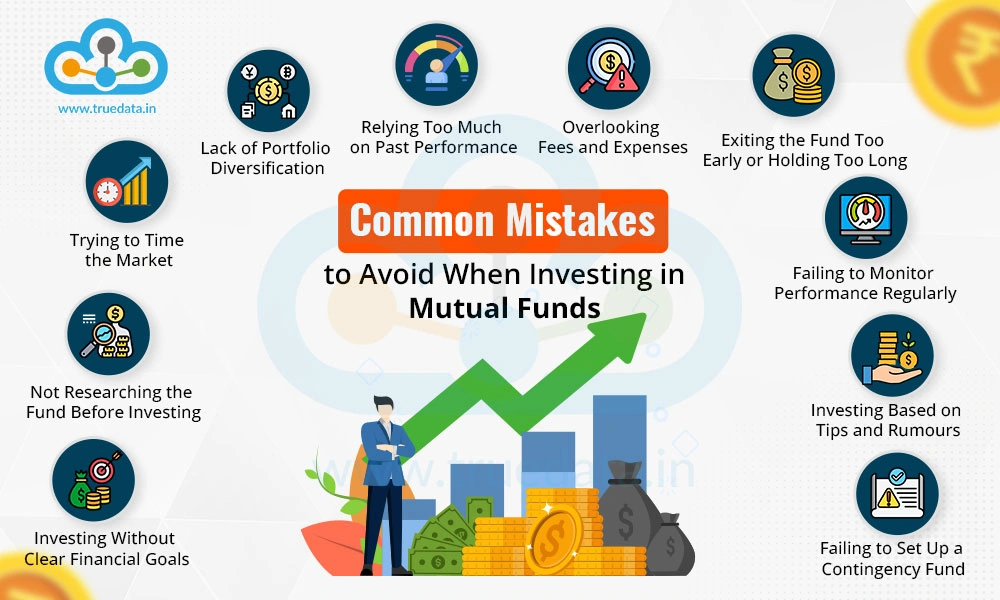
7 Mutual Fund Investment Mistakes Beginners Keep Making
If you are starting with mutual funds, the early decisions matter more than most people think. A small mistake can turn into years of weak returns, extra risk, or a portfolio that does not fit your goals. That is why mutual fund investment mistakes deserve attention now, not after the damage is done. Too many beginners chase last year’s winners, ignore costs, or buy funds without knowing what they own. The result is predictable. You get confusion, poor timing, and a plan that feels active but behaves randomly. Do you really want your first investing habits to lock in bad results?
What beginners usually get wrong
- They pick funds based on recent returns instead of the fund’s role in a long-term plan.
- They ignore risk and buy equity funds with money they may need soon.
- They focus on the fund name and miss the underlying holdings, style, and costs.
- They stop investing after a dip and break the discipline that makes SIPs work.
- They hold too many funds and end up with overlap, not diversification.
Why mutual fund investment mistakes happen so often
Beginners usually treat mutual funds like products on a shelf. They compare returns, pick the one with the best recent chart, and move on. But a mutual fund is more like a kitchen knife than a gadget. The tool matters, but so does how you use it.
SEBI’s investor education materials have long stressed basics such as risk fit, time horizon, and diversification. That advice sounds plain because it is. Plain works.
The 7 mutual fund investment mistakes you need to avoid
1. Chasing past performance
Last year’s top fund is not a reliable guide. Market cycles change, managers change styles, and hot sectors cool off. A fund that beat the pack in a bull run can lag badly later.
Look at consistency over full market cycles, not a single calendar year. Ask a simple question. Would this fund still make sense if it stopped being a top performer tomorrow?
2. Ignoring your time horizon
Equity funds can be useful for long goals, but they can also swing sharply in the short term. If your goal is less than three years away, high-volatility funds can force you to sell at the wrong time. That is a planning error, not a market surprise.
Match the fund to the goal. Emergency cash belongs in liquid or ultra-short duration options, while long-term goals can take more equity exposure.
3. Not checking what the fund actually holds
Two funds can sound different and own many of the same stocks. One may be a large-cap fund in name but act like a concentrated growth bet. Another may carry debt exposure you did not expect.
If you do not know the fund’s holdings, you do not really know the risk you are taking.
Read the factsheet, look at sector concentration, and check whether the strategy matches your intent. The label is only the first clue.
4. Overlooking expense ratio and exit load
Costs matter because they quietly reduce your returns every year. A high expense ratio can eat into long-term compounding, especially if the fund does not beat a cheaper option by enough margin. Exit loads can also hurt if you trade too often.
Keep an eye on total cost, not just the headline performance. A cheaper fund is not automatically better, but cost should be part of the comparison.
5. Investing without an asset allocation plan
Buying mutual funds without deciding your equity, debt, and cash mix is like building a house without a floor plan. You may still end up with walls. They may just be in the wrong place.
Your allocation should reflect your goal, age, income stability, and tolerance for volatility. Rebalance when the mix drifts too far from target.
6. Panicking during market falls
This is one of the costliest mutual fund investment mistakes. Investors buy into equity funds after headlines look cheerful, then sell after a sharp drop. That pattern destroys discipline and often locks in losses.
If you invest through SIPs, keep going unless your goal or cash flow changes. Market dips are uncomfortable, but they are also the price of entry for long-term equity returns.
7. Owning too many overlapping funds
More funds do not always mean more safety. If three equity funds own the same large banks, tech names, and consumer stocks, you may have duplication, not diversification. And duplication gives you a false sense of spread.
Many beginners can manage with a small, clean set of funds. One equity fund, one debt fund, and one hybrid fund may be enough, depending on your goals.
How to choose better from the start
- Start with the goal. Name the purpose, time frame, and amount you need.
- Pick the risk level. Match equity, debt, or hybrid exposure to that goal.
- Check the fund style. Read the factsheet and see what it owns.
- Compare costs. Look at expense ratio, exit load, and tax treatment.
- Use SIPs for discipline. Automate investing so emotion does not run the show.
Keep it simple at the start. Simplicity is not a lack of sophistication. It is often the smartest way to avoid expensive mistakes.
What a disciplined investor does differently
A disciplined investor does not treat mutual funds like lottery tickets. They choose funds for a purpose, review them once in a while, and avoid constant switching. That approach may sound dull. It works.
Ask yourself one blunt question before every purchase: does this fund help my goal, or does it only help my mood today?
Stay with the process
Most mutual fund errors come from haste, not lack of intelligence. You do not need to predict the market. You need a plan that fits your timeline, your cash flow, and your nerves.
Start with one or two well-chosen funds, track them with a calm eye, and ignore the noise that tries to turn investing into a sprint. The next time a hot fund makes headlines, will you buy it, or will you check whether it actually belongs in your portfolio?