
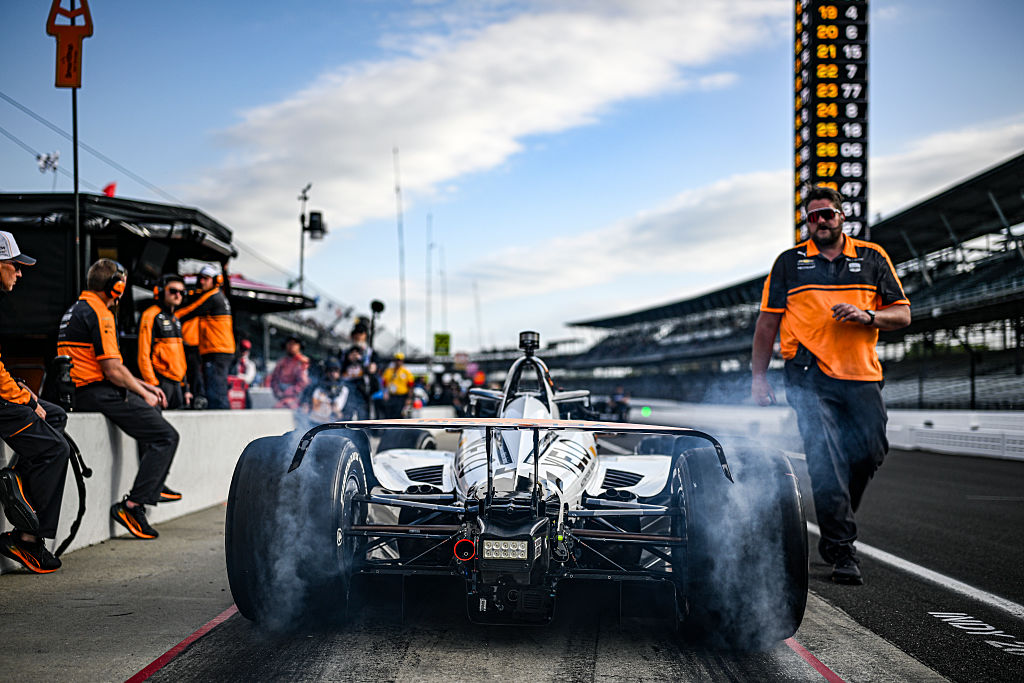
Pato O’Ward Carb Day Practice and Backup Car Reset
You want a clean, predictable race car before the Indianapolis 500. Pato O’Ward did not have that luxury. After switching to a backup chassis, he arrived at Carb Day practice needing laps, feedback, and a baseline he could trust. That is why Pato O’Ward Carb Day practice mattered more than the usual final tune-up. This was not about polishing a fast car. It was about making a replacement car feel familiar enough for 500 miles at speed.
That kind of reset can change a race weekend. Drivers build rhythm through tiny details, from steering feel to weight transfer in traffic, and a backup car can scramble all of it. So the real question was simple. Could O’Ward and Arrow McLaren turn a disrupted week into a usable race setup before Sunday?
What stands out
- O’Ward used Carb Day to learn a backup car, not just trim for race pace.
- The session gave Arrow McLaren a needed shakedown after the chassis change.
- Traffic feel and driver confidence mattered as much as outright speed.
- A stable car on race day could matter more than one flashy practice number.
Why Pato O’Ward Carb Day practice carried extra weight
Carb Day usually works as a last systems check. Teams confirm race trim, rehearse pit lane details, and avoid drama. For O’Ward, the job list was longer because the backup car still needed to feel sorted.
Look, that changes the whole purpose of the session. Instead of chasing a headline lap, the team had to answer basic but non-negotiable questions. How does the car react in dirty air? Does it stay planted on corner entry? Can O’Ward predict what it will do over a long run?
Sometimes the final practice is not about speed. It is about trust.
And trust is hard to fake at Indianapolis. Drivers enter corners at extreme speed, inches from other cars, and any hint of uncertainty gets exposed fast. A backup car can be quick, sure, but if the balance shifts unexpectedly in traffic, that speed means less than people think.
The backup car problem is bigger than fans assume
Fans hear “backup car” and often treat it like a simple spare. It is rarely that neat. Even with matched setups and shared engineering data, a replacement chassis can feel different in ways that matter to a driver. Tiny changes in stiffness, response, or aero balance can alter confidence.
Think of it like a relief pitcher stepping into the World Series with a glove that fits almost right. The glove still works. But “almost” is not a comforting word when every movement has to be automatic.
That was the challenge here. Arrow McLaren needed to compress a lot of learning into a short session, and O’Ward needed to recalibrate his feel without overdriving the car. Honestly, that is a demanding mix.
What a shakedown session needs to accomplish
- Confirm the car is mechanically sound.
- Check balance over a meaningful run, not one flyer.
- Evaluate how the car behaves in traffic.
- Give the driver a repeatable feel on braking and turn-in.
- Leave the team with a race-day setup direction.
If a team gets those boxes checked, the day is useful even without a stunning time on the board.
What O’Ward and Arrow McLaren were likely chasing
The public timing screen tells only part of this story. In a session like this, the garage tends to focus on stability, tire behavior, and consistency in a tow. That matters because the Indy 500 is won in traffic, over stints, with pit strategy folded into every decision.
One clean metric matters less than the full picture.
O’Ward’s feedback would have shaped most of the agenda. Did the car rotate naturally in the center of the corner? Was it too nervous behind other cars? Did it need front wing changes, weight-jacker tweaks, or damper adjustments to calm the platform? Those are the details that turn a backup car from acceptable into raceable.
There is also the emotional side. Drivers will not always say it plainly, but comfort counts. A car that talks back in a familiar way lets a driver save fuel, judge passes, and protect tires with more precision. And that can decide the final 50 laps.
Pato O’Ward Carb Day practice was about race survival first
Could O’Ward still be dangerous on Sunday? Absolutely. But this situation called for realism over hype. The first win was getting through Carb Day with a car that made sense, one that gave him enough confidence to attack when the race opened up.
That is why final practice can fool people. A team buried in setup work may look ordinary on the chart while making the exact gains it needs. Another team may post a strong lap but still hate the car in traffic. Indianapolis has a habit of exposing the difference.
And O’Ward is not the kind of driver who needs perfect conditions to fight forward. He is aggressive, sharp in traffic, and usually willing to take narrow chances when the car gives him an opening. If the backup machine responded well on Carb Day, that alone would have improved his outlook in a seismic way.
What readers should watch on race day
If you want to judge whether the Carb Day reset worked, skip the early lap chart obsession and watch for these signs instead:
- Whether O’Ward can hold position comfortably in traffic.
- How stable the car looks on corner entry in a pack.
- Whether he can move lanes without a dramatic balance shift.
- If the team keeps strategy flexible rather than defensive.
- How assertive he becomes after the first round of stops.
Those clues tell you more than a single radio comment or a one-lap burst. A calm, predictable car opens options. A nervous one shrinks them fast.
Where this leaves O’Ward now
The best case for Arrow McLaren was never magic. It was clarity. Carb Day gave O’Ward and the team a final shot to turn disruption into something manageable, and that can be enough at Indy if the setup window is close.
But the margin is thin. Backup cars can surprise people in good ways and bad ones, and the 500 rewards teams that solve problems before the green flag instead of after it. If O’Ward leaves the opening stint saying the car feels normal, then this whole scramble starts to look less like damage control and more like a successful reset.
That is the bet now. Not perfection. Just a car he can trust when the race gets messy.