
Savings Rate vs Investment Returns: Which Matters More?
If your money feels stuck, you are probably staring at the wrong number. Many people obsess over market returns and ignore their savings rate, even though the amount you save can have a bigger effect on your wealth than a hot year in stocks. That matters now because inflation, higher living costs, and uneven markets make guesswork expensive. You do not need a perfect portfolio to build momentum. You need a system that lets you save more, invest steadily, and avoid fooling yourself with one good year. Which one actually moves the needle faster, savings rate or investment returns? The answer is less glamorous than the finance ads, but far more useful.
What matters most right now
- Your savings rate controls the base. If you save 20% of your income instead of 5%, you give yourself far more capital to invest.
- Investment returns amplify what you already saved. They help most when your contributions are steady and large enough to matter.
- Fees and taxes can eat returns fast. Low costs matter more than flashy performance claims.
- Small behavior changes can beat market timing. A higher savings rate is often easier to improve than annualized returns.
- Both matter, but not equally. Early on, savings habits usually have more power.
Savings rate vs investment returns: why the savings rate often wins
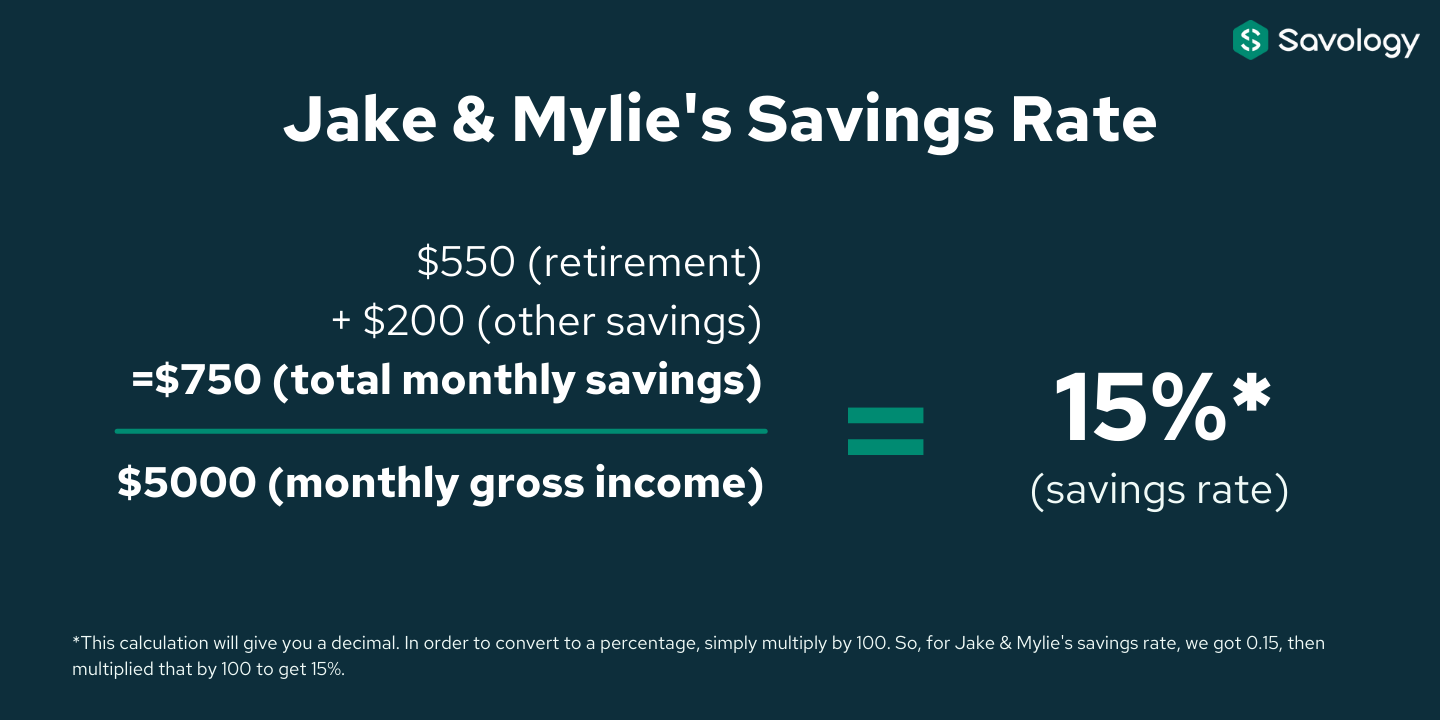
Your savings rate is the share of income you keep and put to work. That makes it the engine. Investment returns are the force multiplier. If the engine is tiny, the multiplier has less to work with.
Here is a simple example. Say you earn $70,000 and save 10%, which is $7,000 a year. If you raise that to 20%, you double your annual contributions before the market does a thing. A 10% return on $7,000 is nice. A 10% return on $14,000 is better. But the bigger win came from your behavior, not Wall Street.
That is the part people miss. They focus on picking the right fund, then keep spending almost everything they make. That is like trying to fill a bucket with a bigger hose while leaving a hole in the bottom.
Money grows fastest when you control the input. Investment returns matter, but contributions usually matter more until your balance gets large.
How savings rate vs investment returns work together
There is no clean winner forever. At some point, your portfolio becomes large enough that returns can outpace your new contributions. But most households are nowhere near that stage. They are still in the build phase.
Think of it like building a house. Your savings rate is the foundation and framing. Returns are the finishing work. A polished interior does not help if the frame is weak.
Use this rough rule
- Start by raising your savings rate.
- Automate investments into low-cost funds.
- Keep fees low and tax drag under control.
- Only then spend more time optimizing returns.
This order is practical. It keeps you from chasing performance before you have enough capital to benefit from it.
What a better savings rate looks like
You do not need a dramatic jump overnight. Start with one clean move. Increase your retirement plan contribution by 1% to 2%. Move a regular transfer into savings the day after payday. Cut one recurring bill and redirect the difference.
And yes, the details matter. If you save more by trimming fixed costs, the improvement lasts. If you save more only by using willpower, the effect often fades. Why make it harder than it needs to be?
Try this sequence:
- Set a target savings rate, such as 15% or 20%.
- Automate transfers so you do not rely on memory.
- Use raises and bonuses to lift your rate without changing your lifestyle much.
- Track the rate monthly, not just the balance.
How to improve investment returns without chasing hype
You do not need to become a stock picker. You need to avoid self-inflicted damage. Low-cost index funds, broad diversification, and a long time horizon do more than most active strategies for most people.
Here is the thing. Return-chasing often looks smart right before it hurts you. Chasing last year’s winner is a bad habit. So is paying high fund fees for the illusion of expertise. The Securities and Exchange Commission has long warned that fees and trading costs can reduce returns over time, and that warning still lands.
Focus on the controllables
- Keep expense ratios low.
- Use tax-advantaged accounts first, like 401(k)s and IRAs.
- Rebalance on a schedule instead of reacting to headlines.
- Avoid frequent trading unless you have a real plan.
That is boring. It also works.
Where the tipping point usually happens
At the start of your investing life, your savings rate tends to matter more. Later, a larger balance makes compounding more visible. That shift does happen. But many people overestimate how soon it arrives.
For example, if you save an extra $5,000 a year, that is a guaranteed contribution. To beat that through returns alone, your portfolio must be large enough, and the market must cooperate. If your balance is still modest, the math is not close.
This is why a strong savings habit is non-negotiable. It gives you more shots on goal. Returns then become the icing, not the whole cake.
What you should do next
Pick one number this week. Your savings rate. Then improve it by at least one point. After that, make sure the money lands in a low-cost investment account and stays there.
If you want a simple order of operations, use this:
- Build a small emergency fund.
- Raise your savings rate.
- Invest consistently in broad, low-fee funds.
- Review fees, taxes, and contribution levels twice a year.
That approach is not flashy. But it puts you on the right side of the math. And once that happens, do you really care whether your annual return was 8% or 10%?
Keep your eye on the right scoreboard
The market will always tempt you to stare at performance charts. Ignore the noise. Your savings rate tells you how much fuel you are putting into the system, and that is the part you can control today. Improve that first, then let investment returns do their job over time. The people who win with money usually do one thing better than everyone else. They keep feeding the machine.