Budget Chicken and Dumplings That Actually Saves Money
You want dinner that feels filling without treating your grocery budget like an open tab. That is why budget chicken and dumplings works so well right now, especially with chicken prices, dairy costs, and takeout fees still pinching weekly meal plans. The Budget Bytes version of chicken and dumplings is a smart starting point because it leans on humble ingredients: chicken, vegetables, broth, flour, milk, and pantry seasoning. No fancy shortcuts. No expensive garnish pretending to be value. I have covered consumer tech and household spending for years, and the pattern is the same in food as it is in apps: the best savings come from repeatable systems, not one-time tricks. This dish gives you that system. One pot, flexible ingredients, and enough comfort to make leftovers feel welcome the next day.
What Makes This Worth Cooking
- It turns low-cost staples into a full meal. Flour, broth, vegetables, and chicken do most of the work.
- It handles leftovers well. The stew thickens overnight, which makes lunch easier.
- It does not depend on premium cuts. Thighs, leftover chicken, or even rotisserie scraps can work.
- It cuts takeout temptation. A warm pot on the stove beats another delivery fee.
Why Budget Chicken and Dumplings Belongs in Your Meal Plan
Chicken and dumplings is not the cheapest meal on earth, but it is one of the better values if you care about satiety. Beans and rice may cost less, but this dish hits the comfort-food slot that often sends people to a restaurant menu.
Here is the thing: budget meals fail when they feel like punishment. A good pot of chicken and dumplings gives you protein, vegetables, starch, and a creamy broth in one bowl, which means you are less likely to snack your way through the pantry later.
A budget recipe earns its place when it keeps you full, uses ingredients you already buy, and tastes good enough to repeat.
That is the same reason I like the Budget Bytes approach. It keeps the recipe grounded in normal grocery-store food instead of turning savings into a scavenger hunt.
How to Make Budget Chicken and Dumplings Cheaper Without Ruining It
Cheap comfort food still has to taste like dinner.
Start with the chicken. Boneless thighs usually bring more flavor than breasts and can be cheaper, depending on your store. Bone-in chicken can cost less per pound, but you need to account for bones, skin, and extra cooking time.
If you already have cooked chicken, use it. Leftover roast chicken, turkey, or a picked-over rotisserie bird can slide into the pot near the end, which protects the meat from turning stringy. Why pay twice for protein when yesterday’s dinner can carry tonight’s?
Smart grocery swaps
- Use frozen vegetables. Frozen carrots, peas, corn, or mixed vegetables cut prep time and reduce waste.
- Buy store-brand broth. Better yet, use bouillon if you already keep it in the cabinet.
- Skip heavy cream if needed. Milk plus a flour-based thickener still gives body.
- Use dried herbs. Thyme, parsley, sage, and black pepper bring the classic flavor without a pricey fresh herb bundle.
- Stretch with extra vegetables. Celery, onion, carrots, and peas add bulk for less than extra meat.
One caution from many years of testing budget claims: do not assume homemade is always cheaper unless you use the ingredients again. A bag of flour makes sense if you bake or cook often, but a one-off spice jar can erase the savings fast.
The Dumpling Decision: Homemade, Biscuit Mix, or Store-Bought?
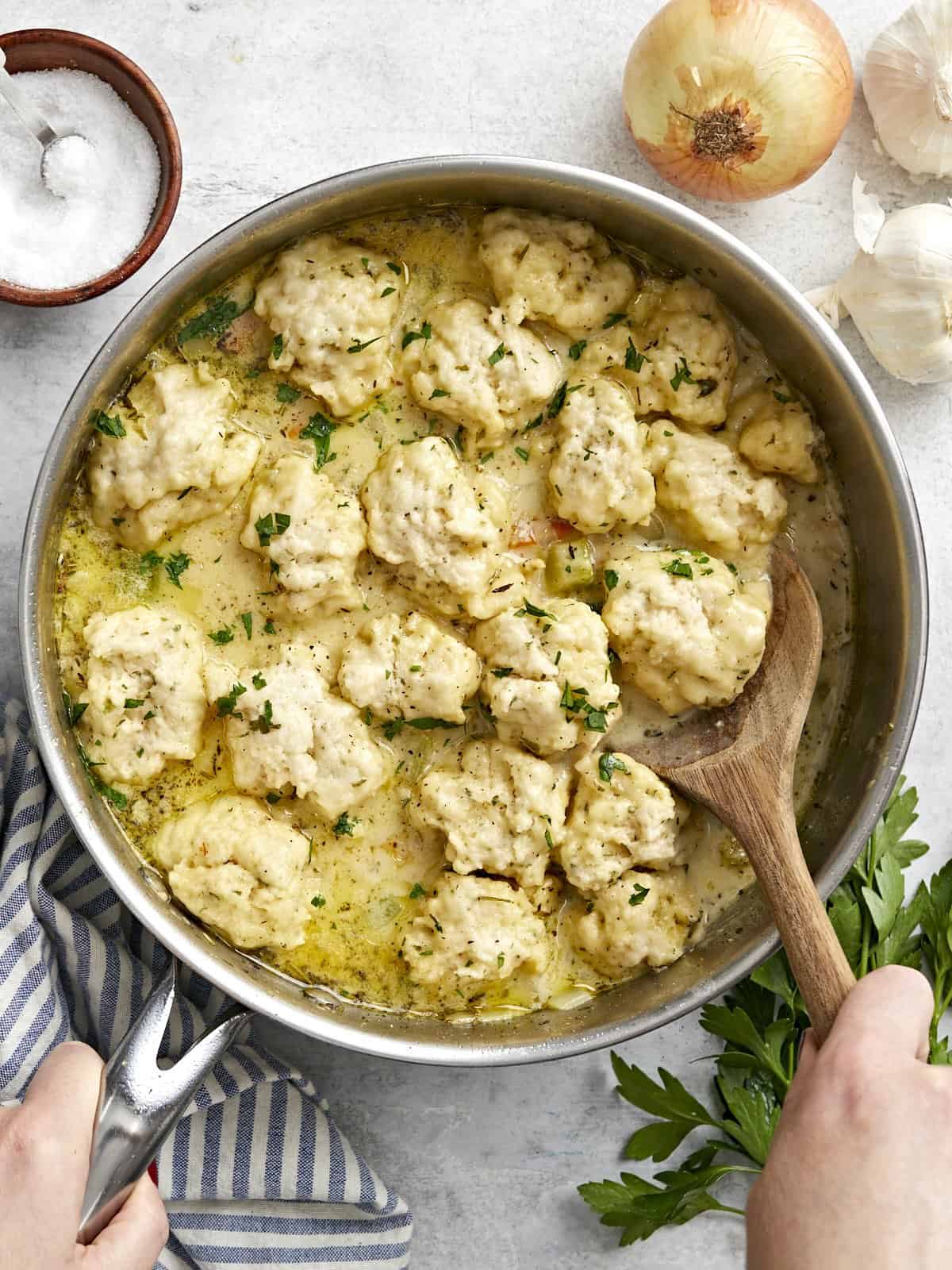
The dumplings are where this meal acts like architecture. The stew is the foundation, but the dumplings are the roof, and if they are heavy or soggy, the whole structure feels off.
Homemade drop dumplings usually win on price. Flour, baking powder, salt, fat, and milk can make a tender topping without a canned biscuit premium. But if canned biscuits are on sale, they can be a fair shortcut (especially on a weeknight).
- For lowest cost: make simple drop dumplings from pantry staples.
- For fastest prep: use biscuit dough and cut it into smaller pieces.
- For best texture: simmer gently and keep the lid closed while the dumplings cook.
Do not stir aggressively after the dumplings go in. You are making dinner, not testing a blender. A gentle simmer lets the dough puff and cook through without dissolving into paste.
Budget Chicken and Dumplings Meal Prep Tips
This recipe can fit a Sunday prep routine, but you need to think about texture. Dumplings absorb liquid as they sit, so the leftovers may become thicker than the first serving.
That is not a flaw. Add a splash of broth or milk when reheating, then warm it slowly on the stove or in the microwave at partial power. Stir around the dumplings, not through them.
How to store it
- Refrigerator: Store in airtight containers for 3 to 4 days, following general USDA guidance for cooked leftovers.
- Freezer: The stew base freezes better than the finished dish with dumplings.
- Best prep move: Freeze the chicken stew base, then make fresh dumplings when you reheat it.
If you cook for one or two people, portion the base before adding dumplings. That gives you flexibility, and it keeps the second meal from feeling like a compromise.
What This Meal Really Costs You
Prices swing by region, store, and season, so any exact cost estimate ages quickly. Budget Bytes built its reputation by pricing recipes per serving, which is useful because it forces you to see dinner as a cost per bowl instead of a vague cart total.
Your biggest variables are chicken, dairy, and broth. If you buy chicken on sale, use bouillon, and rely on pantry flour, this meal can land well below the cost of fast food for a family. If you buy premium broth, fresh herbs, and organic chicken at full price, the savings shrink.
Look, that is not a moral judgment. It is just math. The point is to pick the version that fits your budget rather than copying every ingredient without checking your pantry first.
Where Budget Chicken and Dumplings Can Go Wrong
The most common mistake is underseasoning. Creamy dishes need enough salt, pepper, herbs, and aromatics to avoid tasting flat. Onion, garlic, celery, and carrots are doing more than filling space here.
The second mistake is rushing the thickening step. Flour needs a little time with fat or liquid to lose its raw taste. If the broth looks thin at first, give it a few minutes before dumping in more flour.
The third mistake is overcrowding the top with dumplings. They need steam and space to cook evenly. Smaller spoonfuls beat giant dough islands every time.
A Practical Next Step
Make this once with what you already have, then write down the version your household actually ate. If the kids picked around celery, swap in peas next time. If the chicken felt sparse, add more carrots and a little extra broth instead of doubling the meat.
That is how a recipe becomes a budget tool. Not by being perfect, but by being repeatable. The smartest move this week may be simple: cook one pot, price the leftovers, and see which takeout order it replaces.