Sequence of Returns Risk: How to Protect Retirement Income
You can save for decades, hit your target number, and still run into trouble if the market drops at the wrong time. That is the sting of sequence of returns risk. It is not about your average return over 30 years. It is about the order of those returns, especially right before and after you retire. A bad market early in retirement can force you to sell more shares to cover living costs, leaving fewer assets to recover when markets rebound. Money Crashers explains this risk as one of the hidden threats that can make two retirees with the same average return end up with very different outcomes. The fix is not panic. It is planning. You need cash flow, flexibility, and a withdrawal strategy that can survive a rough first inning.
What Matters Most
- Sequence of returns risk hits hardest during the first 5 to 10 years of retirement.
- Average returns can hide the damage caused by early losses and forced withdrawals.
- A cash buffer, flexible spending, and diversified income sources can reduce pressure to sell in a downturn.
- Your withdrawal rate should adjust when markets fall, not run on autopilot.
What Is Sequence of Returns Risk?
Sequence of returns risk is the danger that investment losses arrive at a bad time. For retirees, the bad time is usually early retirement, when you start withdrawing from your portfolio and no longer add new savings.
Here is the thing. Two portfolios can earn the same long-term average return, but the one with losses up front can run out of money sooner. Why? Because withdrawals during a market dip lock in losses and shrink the base that would otherwise recover.
The order of returns can matter as much as the returns themselves when you are drawing income from investments.
Think of it like cooking for a crowded dinner. If you burn the first tray of food and guests start eating what is left, the kitchen has to work harder all night. A later perfect tray helps, but it may not fully replace what was lost early.
Why Sequence of Returns Risk Hits Retirees Harder
During your working years, market dips can be annoying, but they can also help you buy shares at lower prices through regular contributions. In retirement, the math flips. You are selling shares, not buying them.
That shift turns volatility from a nuisance into a cash-flow problem. If your portfolio drops 20 percent and you still withdraw the same dollar amount, you sell a larger slice of what remains. Repeat that for a few years and the damage compounds.
Bad timing can turn a solid plan into a fragile one.
Does that mean you should avoid stocks once you retire? No. Inflation can grind down cash and bonds over a long retirement. The point is to hold enough growth assets for later while keeping enough stable assets for near-term spending.
A Simple Example of Sequence of Returns Risk
Say you retire with $1,000,000 and plan to withdraw $40,000 in year one. That is a 4 percent starting withdrawal rate. Now imagine the market falls 25 percent in the first year before your withdrawal needs are met.
Your portfolio could drop to $750,000, then fall further after taking income. Even if markets recover later, your account has fewer shares working for you. The recovery has less raw material.
Now reverse the order. If strong returns come first and losses arrive later, the early gains may build a cushion. Same average return, different path, different retirement result. That is why averages can mislead.
How to Reduce Sequence of Returns Risk Before Retirement
The best time to address this problem is before your final paycheck. I have watched too many retirement plans treat the retirement date like a finish line. It is closer to halftime.
Build a cash reserve for early withdrawals
A cash reserve gives you breathing room when stocks are down. Many planners suggest keeping one to three years of expected withdrawals in cash or short-term instruments, depending on your pension, Social Security, risk tolerance, and spending needs.
This does not mean stuffing half your portfolio into a savings account. It means matching safe assets to near-term bills. Your future self will care less about squeezing every last bit of yield and more about avoiding forced sales during a selloff.
Shift gradually, not suddenly
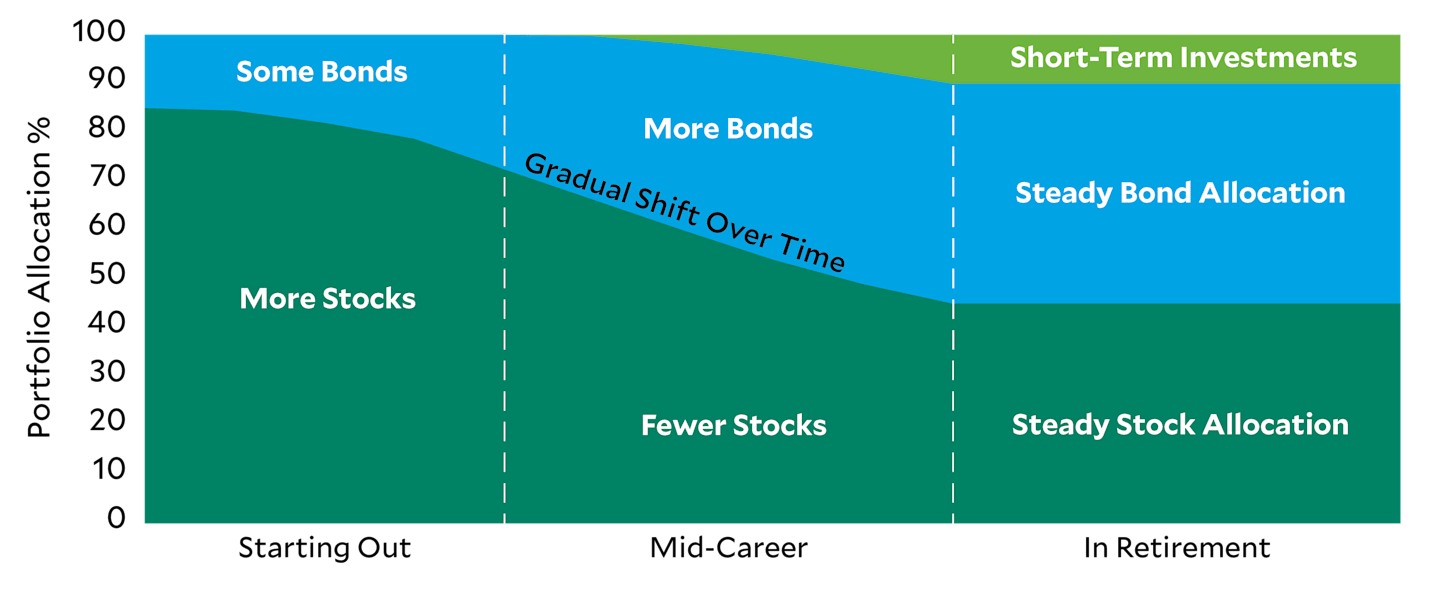
A sharp move from aggressive growth to ultra-conservative investments can create a new problem. You may reduce market risk but raise longevity and inflation risk. A gradual shift in the years before retirement usually works better.
Some investors use a bond tent, which increases bond exposure as retirement nears, then slowly reduces it later. The idea is simple. Protect the danger zone around retirement without giving up growth for the next 25 or 30 years.
Stress test your plan
Run your plan through ugly market periods, including 2000 to 2002 and 2008 to 2009. You can use retirement calculators, a financial planner, or planning software that models poor early returns.
Look beyond the success percentage. Ask what spending cuts would be needed, how long your cash reserve lasts, and whether delayed Social Security changes the result. That is where the useful insight lives.
How to Manage Sequence of Returns Risk After Retirement
Once retirement starts, control shifts from saving to withdrawing. You cannot control the market, but you can control how much you sell, from which account, and when.
Use flexible withdrawals
A fixed inflation-adjusted withdrawal sounds clean. Real life is messier. If markets drop hard, consider pausing inflation increases or trimming discretionary spending for a year or two.
Small cuts early can protect a portfolio more than large cuts later. Travel, car upgrades, gifts, and home projects often have room for timing changes (medical costs and housing are a different story).
Segment your money by time frame
A bucket strategy can help you organize retirement income. It is not magic, but it can bring discipline when markets get noisy.
- Bucket one: Cash for one to three years of spending needs.
- Bucket two: Bonds or conservative funds for the next several years.
- Bucket three: Stocks and growth assets for long-term needs.
The benefit is behavioral as much as mathematical. When stocks fall, you can draw from cash or bonds instead of selling equities at lower prices. That can keep you from making a scared decision at the worst moment.
Coordinate Social Security and pensions
Guaranteed income can lower pressure on your portfolio. Social Security, pensions, and some annuity income can cover baseline expenses, which makes market dips easier to absorb.
Delaying Social Security can raise your monthly benefit, especially between full retirement age and age 70. It is not the right move for everyone, but it deserves a hard look if you are healthy, married, or worried about outliving assets.
Sequence of Returns Risk and Asset Allocation
Your asset mix should reflect the job your money has to do. A 65-year-old with a pension, low expenses, and a paid-off home can often take different risks than someone with high fixed costs and no guaranteed income beyond Social Security.
Stocks help fight inflation and support long retirements. Bonds, cash, Treasury bills, CDs, and high-quality short-term funds can help cover withdrawals during market stress. Real estate income may help too, though it brings its own headaches.
Look, the old “100 minus your age” stock rule is too blunt. It ignores health, taxes, spending, family support, debt, and whether you can sleep when the S&P 500 drops 30 percent. Use it as trivia, not as a plan.
Common Mistakes That Make Sequence of Returns Risk Worse
The risk often grows because retirees make reasonable choices in isolation that clash as a group. A high withdrawal rate, a stock-heavy portfolio, and no cash reserve can look fine during a bull market. Then the tide turns.
- Retiring with no spending flexibility: A plan with no room for cuts can break faster in a downturn.
- Chasing yield: High-yield investments can carry hidden credit, liquidity, or concentration risk.
- Selling winners and losers without a tax plan: Withdrawals should consider taxable accounts, IRAs, Roth accounts, and required minimum distributions.
- Ignoring inflation: Too much cash can feel safe while losing buying power over time.
- Taking early losses personally: A downturn is not a verdict on your retirement. It is a scenario your plan should already expect.
Who Should Worry Most About Sequence of Returns Risk?
You should pay close attention if you are within five years of retirement or in your first decade after leaving work. That window is the danger zone because the portfolio is large, withdrawals are starting, and the damage from early losses has years to compound.
You should also pay attention if your planned withdrawal rate is above 4 percent, your expenses are rigid, or most of your income will come from investments. The less guaranteed income you have, the more your portfolio must carry.
What if you are still 20 years from retirement? Keep investing, but remember this risk later. The plan that builds wealth is not always the same plan that turns wealth into steady income.
A Better Next Move
Do not wait for a bear market to learn how your retirement income plan works. Map your next three years of withdrawals, identify which assets you would sell first, and decide in advance what spending you would trim if markets fell 20 percent.
That one exercise can expose weak spots fast. And if your plan only works when markets behave, is it really a retirement plan?